
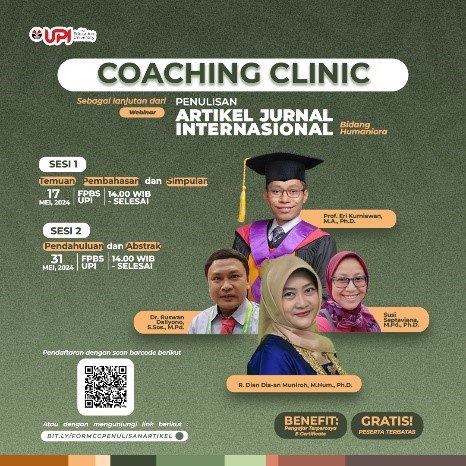
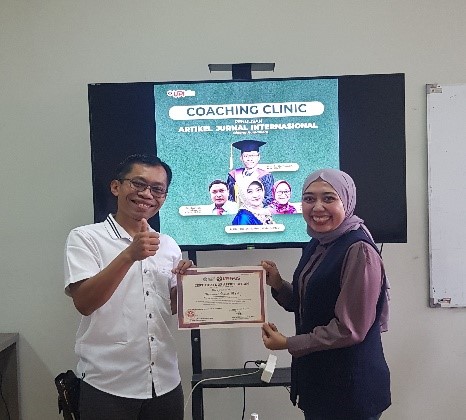
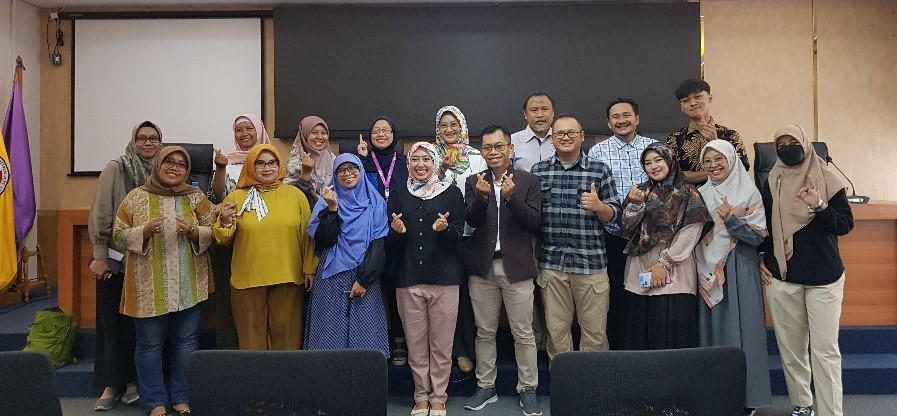
In an increasingly competitive academic environment, the ability to publish in high-impact journals is essential for career progression and scholarly recognition. Recognizing this, the English Language and Literature Study Program at Universitas Pendidikan Indonesia (UPI) held a two-day workshop titled “Crafting Scopus-Ready Articles” as part of their Community Service Project. The workshop, aimed at equipping researchers with the skills to publish in Scopus-indexed journals, took place on May 17 and May 31, 2024, at UPI’s FPBS Building.
The event drew a diverse group of participants from various universities across Bandung, all eager to gain insights into writing articles that meet the rigorous standards of Scopus, one of the world’s leading abstract and citation databases. The workshop focused on three key areas: linguistics, English education, and literature.
R. Dian Dia-an Muniroh, M.Hum., Ph.D., the workshop coordinator, opened the event by highlighting a study conducted by Macháček and Srholec (2021), which identified Kazakhstan and Indonesia as the top two countries with the highest number of publications in predatory journals between 2015 and 2017. She emphasized that the workshop was part of UPI’s broader effort to enhance international publication productivity while reducing the prevalence of predatory publishing, a significant issue in the academic world.
The workshop featured a distinguished panel of experts who shared their vast knowledge and experience. Among them was Prof. Eri Kurniawan, M.A., Ph.D., an expert in rhetorical structure, who provided insights on writing abstracts and preparing submissions. R. Dian Dia-an Muniroh, Ph.D., a leading researcher in forensic linguistics, discussed how to craft compelling introductions. Susi Septaviana, M.Pd., Ph.D., an authority in language teaching and translation studies, guided participants on writing results and discussions. Dr. Ruswan Dallyono, M.Pd., a notable scholar in mathematical and computational linguistics, enriched the sessions with his expertise in writing methods and conclusions.
Over 100 participants initially registered for the workshop, but after a thorough selection process, 20 individuals were chosen based on the quality of their research proposals and their potential for successful publication. The workshop was meticulously structured to provide a comprehensive understanding of the article writing process, with sessions including presentations and group consultations on organizing the main body of an article into logical sections and paragraphs.
The feedback from participants was overwhelmingly positive. Many praised the workshop for being informative, engaging, and highly relevant to their academic needs. The expert guidance, coupled with practical exercises, helped participants develop a deeper understanding of what it takes to get published in Scopus-indexed journals. Several participants reported that they had already started working on their research articles following the workshop and felt more confident in their ability to meet the standards of high-quality academic publications. Some even shared that they had successfully submitted their articles to Scopus-indexed journals based on the knowledge gained from the workshop.
The success of the workshop underscores the need for continued support and training in academic writing. In light of the positive outcomes, several recommendations have been made for future initiatives, including expanding the workshop to cover additional topics like grant writing or ethical research considerations, providing ongoing mentoring and support for participants, partnering with other universities or research institutions to offer similar workshops on a larger scale, and advocating for open-access publishing to ensure wider dissemination of research findings.
The “Crafting Scopus-Ready Articles” workshop at UPI proved to be an invaluable resource for researchers in linguistics, English education, and literature. By equipping participants with the skills and knowledge necessary to succeed in the competitive world of academic publishing, the workshop has made a significant contribution to the advancement of scholarly research and publication. As the academic landscape continues to evolve, initiatives like this are essential in fostering a culture of excellence and innovation.