
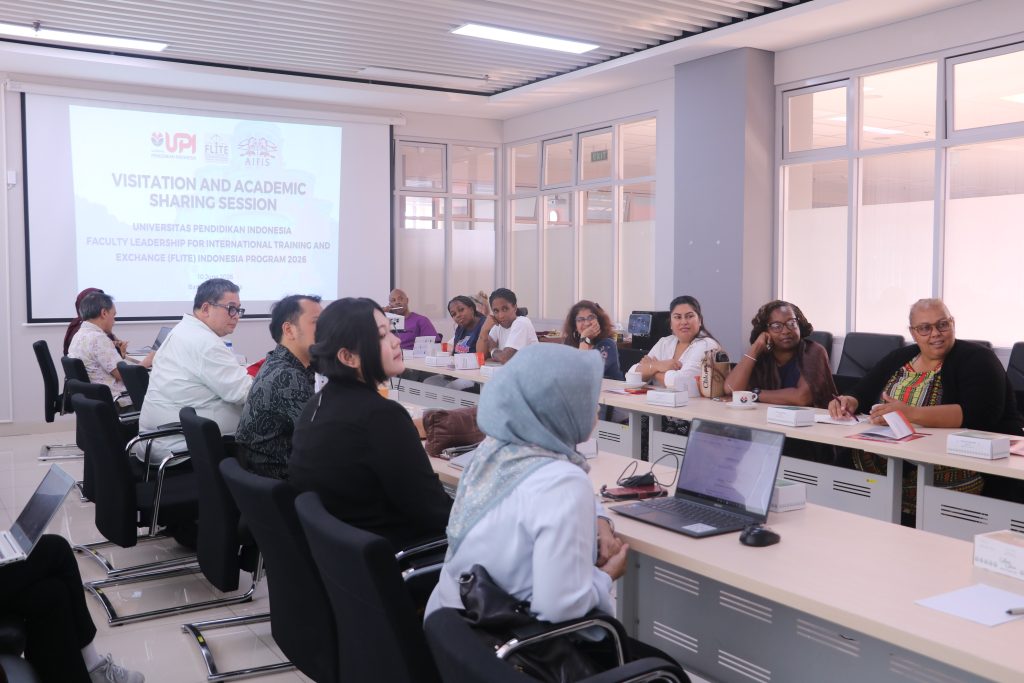
Bandung, June 10, 2026 – Universitas Pendidikan Indonesia (UPI) welcomed delegates of the Faculty Leadership for International Training and Exchange (FLITE) Indonesia Program 2026 for a Visitation and Academic Sharing Session aimed at strengthening international partnerships and fostering cross-cultural academic engagement.
The event brought together academic leaders and faculty members from Indonesia and the United States, including Dr. Megan Hewitt, Executive Director of the American Institute for Indonesian Studies (AIFIS), Mr. Jeff Badger, Program Director of the Council of American Overseas Research Centers (CAORC), and participants of the FLITE Indonesia Program representing higher education institutions across the United States.
Representing UPI, Dr. Pupung Purnawarman, M.Sc.Ed., Ph.D., Director of the Directorate of Partnerships and International Affairs, delivered welcoming remarks on behalf of the university leadership. He expressed UPI’s appreciation for the visit and emphasized the university’s commitment to expanding international collaboration in education, research, and community engagement.
“We are honored to welcome the FLITE Indonesia Program delegation to Universitas Pendidikan Indonesia. International partnerships play an important role in promoting academic excellence, cultural understanding, and collaborative innovation that benefit both institutions and society,” he stated.
Held at UPI’s Center of Excellence Building, the session introduced participants to the university’s academic profile, institutional development, and internationalization initiatives. Delegates learned about UPI’s transformation into a comprehensive university with ten faculties, six campuses, more than 170 study programs, and a growing international network dedicated to advancing education and research.
During the academic exchange session, representatives from AIFIS and FLITE presented the objectives of the program, which focuses on developing faculty leadership and expanding global learning opportunities at participating institutions. The program combines online professional development with educational visits to Indonesia, enabling participants to gain firsthand experience in international education and intercultural engagement.
The discussion explored opportunities for future collaboration in student and faculty mobility, joint research initiatives, global education programs, and international academic partnerships. Participants exchanged perspectives on the role of higher education institutions in preparing students to thrive in an increasingly interconnected world. Additionally, FLITE expressed their willingness to learn about the history and development of Bandung as a rich cultural heritage area, with well-documented research and landscape.
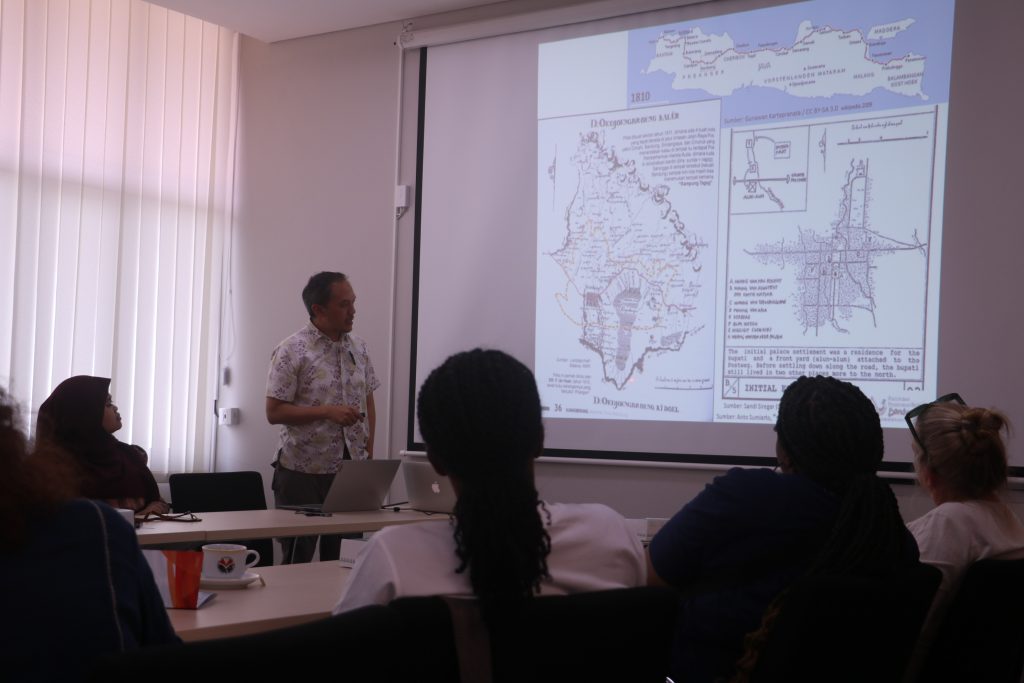
The academic presentation was delivered by Bapak Aji Bimarsono, S.T., M.Sc., Head of Bandung Heritage, and a close partner of UPI’s Architecture Study Program and Architecture Education Study Program. He examined the historical development of Bandung and its rich architectural heritage. The session addressed topics such as urban conservation, sustainable development, cultural preservation, and the challenges of balancing modernization with the protection of historical identity.
The presentation generated an engaging discussion on heritage conservation, decolonization perspectives in architectural studies, urban sustainability, and the importance of preserving cultural narratives within contemporary city development. Participants also shared experiences from their respective institutions and discussed how historical and cultural heritage can contribute to education and community development.
The visitation concluded with a campus tour and cultural exploration activities, providing delegates with a deeper understanding of UPI’s academic environment, institutional heritage, and Bandung’s unique historical landscape.
Through initiatives such as this academic sharing session, UPI continues to strengthen its global engagement and reaffirm its commitment to fostering meaningful international partnerships that advance education, promote research excellence, and deepen intercultural understanding.
Contributor : De Shila Syailinda Maulida
Photographer : Inayah Alawiyyah
Editor : Intan Pratidina Dewi