
As part of the Tri Dharma of Higher Education, specifically in the area of community service, a team led by Prof. Dr. Tuti Suartini, M.Pd., along with lecturers and students from Universitas Pendidikan Indonesia (UPI), Bandung, has conducted a series of educational outreach programs. These programs aimed to educate the Cibadak community on the safe and effective use of solar energy for household needs.
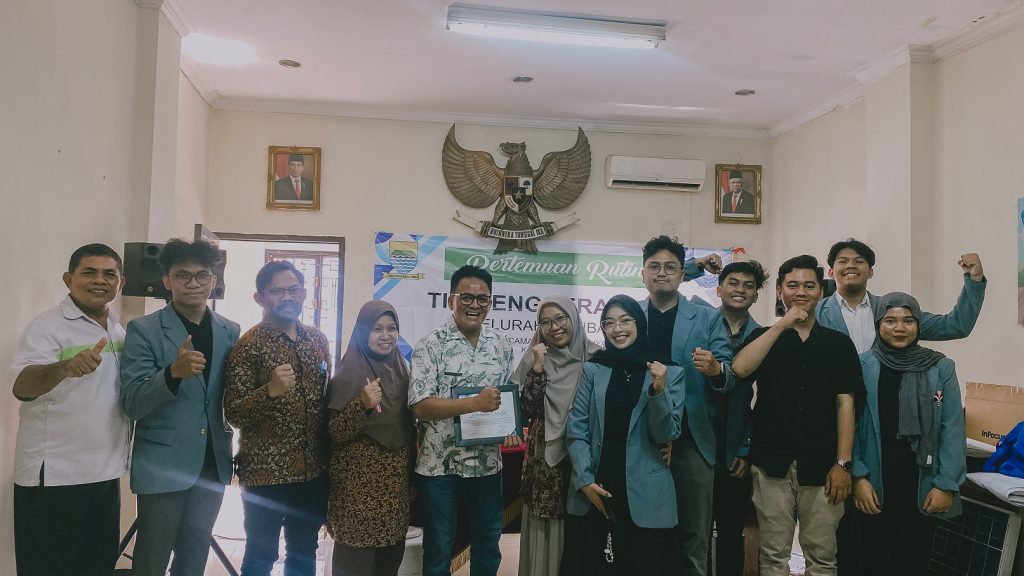
The independent community service program (PkM) involved both UPI lecturers and students. The student team was coordinated by Mochamad Rizal Fauzan and included members Ilham Maulidin Haolani, Alvin Dzaki Pratama Darmawan, Naufal Nadhif Rabbani Iskandar, Rafi Zahran Fauzi, Niken Dwiyantina Lestari, Muhammad Fadhilah, and Salsabila Talya Nurdjamil. The program was conducted in collaboration with the Cibadak Village Head, Dadan Suhendra, S.T., M.T., M.M.
The PkM project, which ran from June to August 2024, introduced the community to an Off-Grid Solar Power System (PLTS) and Machine-to-Machine (M2M) automation devices based on the Internet of Things (IoT). The project was funded by contributions from both lecturers and students and was designed to provide technological advancements to the community as part of UPI’s commitment to the Tri Dharma of Higher Education.
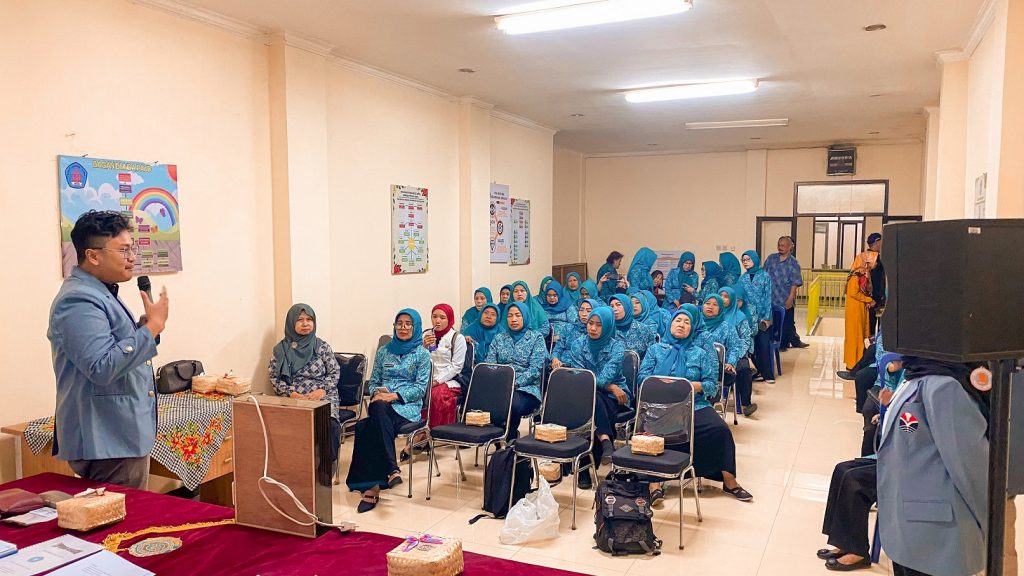
During the routine activities of the PKK (Family Welfare Program) at Cibadak Village in Astana Anyar District, Bandung, the team presented the off-grid solar power system as a zero-carbon energy source that harnesses abundant solar energy year-round. The system is expected to help households save energy while also contributing to a cleaner environment, thereby preventing respiratory diseases. The introduction of automation in the off-grid solar power system is aimed at promoting energy efficiency and boosting the economic well-being of families still facing challenges such as stunting.
The PkM activities were designed to familiarize the community with the use of renewable energy technology as an accessible and practical source of electricity. The sessions included demonstrations of how to operate the solar power system, the inverter, and other related devices. The inverter, which was developed by the student team under the guidance of the lecturers, is designed to protect users and connected devices from potential damage due to unstable or abnormal electrical conditions, such as overloads, voltage drops, and power surges. It features an integrated protection system that guards against over-voltage, under-voltage, short circuits, and thermal overloads, ensuring operational stability and the safety of connected household appliances.
The enthusiasm of the PKK members was evident during the Q&A session, where they expressed keen interest in understanding the technology. They were eager to learn about the installation, maintenance, efficiency, and long-term benefits of the portable solar power system and its off-grid inverter.
The regular activities of the Cibadak Village PKK, led by Mrs. Roro and Village Head Dadan Suhendra, S.T., M.T., provided an excellent platform for the UPI team to share their knowledge and educate the community. It is hoped that the information and skills imparted during these sessions will be disseminated by the PKK members to the wider community.
This community service initiative will continue in other urban and rural areas as part of ongoing efforts to promote the use of off-grid solar power systems and electrical automation. The project, under the leadership of Prof. Dr. Tuti Suartini, M.Pd., and supported by Dr. Saripudin, S.Pd, M.T., Drs. Aan Sukandar, M.Pd., Sri Lestari Harja, S.Pd, M.T., Dr. Cucu Sutianah, S.Pd., M.Pd., and the student research team, will introduce new technologies and devices to benefit both urban and rural communities across Indonesia.