
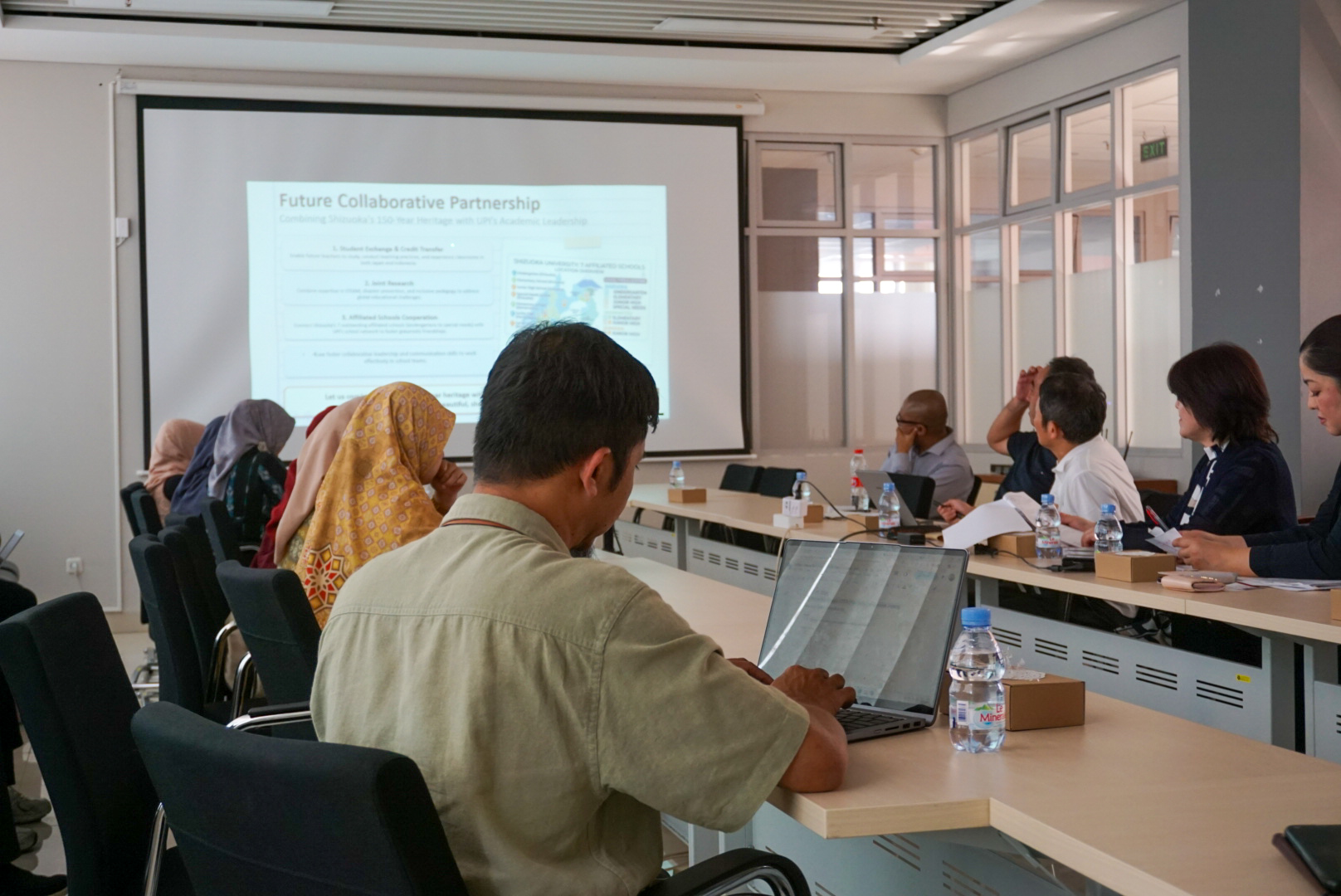
Bandung, July 21, 2026 – Following the signing of the Memorandum of Understanding (MoU) on Academic Collaboration one day earlier, Universitas Pendidikan Indonesia (UPI) and Shizuoka University, Japan, held a Partnership Meeting and Discussion to explore concrete implementation strategies for the cooperation. The meeting focused on translating the newly renewed partnership into collaborative academic programs that will benefit students, faculty members, and both institutions.
The meeting was previously begun by school visits to the UPI Laboratory Schools in Bumi Siliwangi Campus. It continued to bring representatives from both universities together, including academic leaders, faculty members, and international affairs representatives. Prof. Eri Kurniawan, M.A., Ph.D., Head of the International Partnerships Division, Directorate of Partnerships and International Affairs, led the discussion with the attendance of faculty representatives from the Faculty of Educational Sciences (FIP), the Faculty of Mathematics and Natural Sciences Education (FPMIPA), the Faculty of Language and Literature Education (FPBS), the Faculty of Technology and Vocational Education (FPTI), and other related units. The Shizuoka University delegation was led by Prof. Dr. Yuko Kamazuka, Dean of the Faculty of Education, together with academic representatives specializing in STEM education and international collaboration.
The program commenced with a keynote presentation by Prof. Dr. Yuko Kamazuka entitled “Co-Creating the Future of Education.” In her presentation, she introduced Shizuoka University’s vision for developing a sustainable partnership with UPI by combining Shizuoka University’s 150 years of educational heritage with UPI’s academic leadership in teacher education.
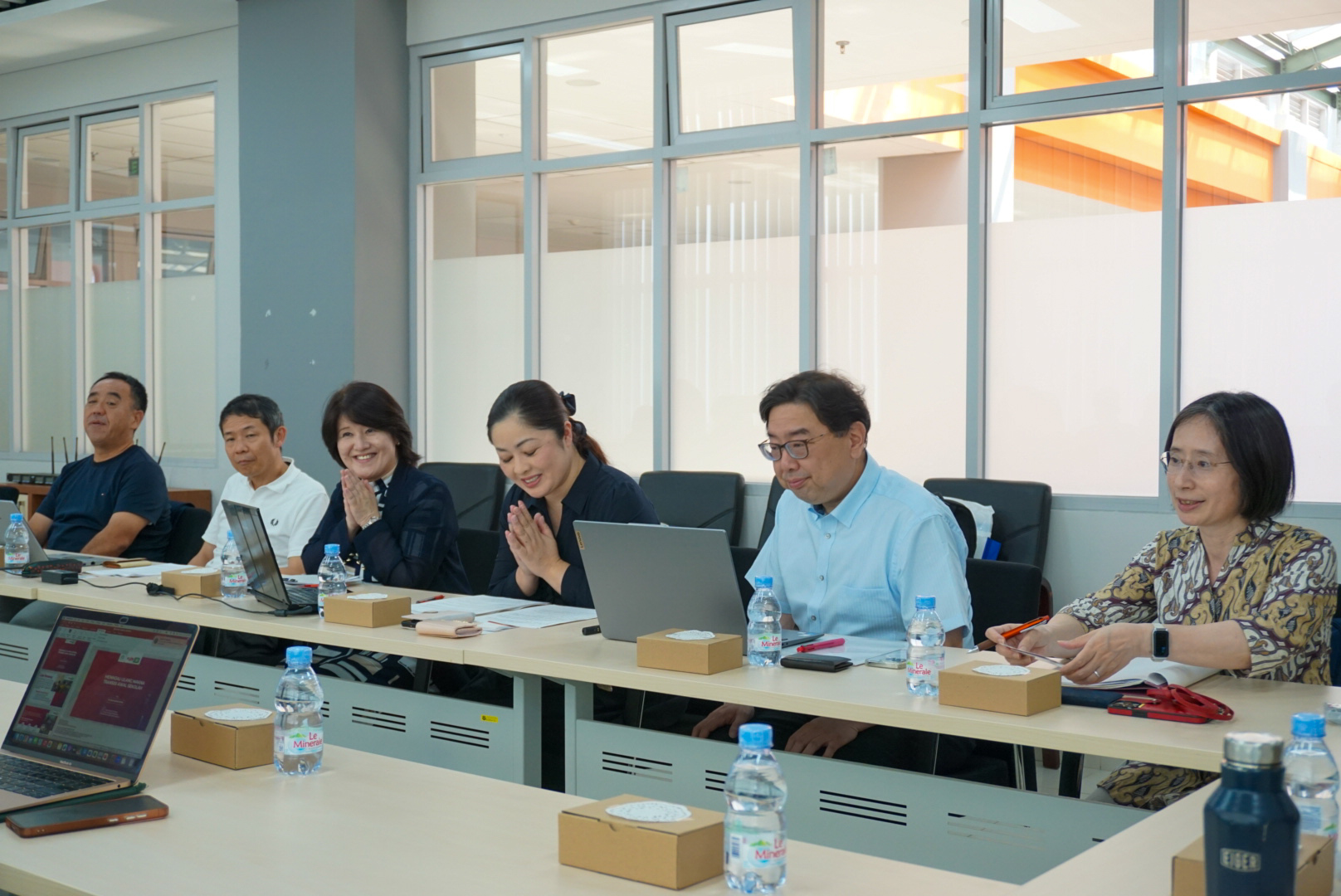
Prof. Kamazuka highlighted several strategic areas for future collaboration. One of the main priorities is developing student exchange and credit transfer programs, enabling future teachers to study abroad, undertake teaching practice, and gain firsthand classroom experience in both Japan and Indonesia. She also emphasized the importance of joint research, bringing together expertise in STEM education, disaster prevention, and inclusive pedagogy to address emerging global educational challenges.
Another proposed initiative focuses on strengthening cooperation between affiliated schools. Shizuoka University introduced its network of seven affiliated schools, ranging from kindergarten to special needs education, and proposed establishing partnerships with UPI’s laboratory school network to promote educational innovation, intercultural understanding, and long-term institutional friendship. In addition, both universities expressed a shared commitment to fostering collaborative leadership, communication skills, and teamwork among future educators to prepare graduates for increasingly dynamic educational environments.
Following the plenary session, participants were divided into two parallel discussion groups: the STEM Group Discussion and the Language Group Discussion, allowing faculty members from related disciplines to explore more specific collaborative opportunities.
The STEM Group Discussion began with a presentation by Assoc. Prof. Dr. Akira Yukita, STEM Education Representative from Shizuoka University. He introduced Shizuoka University’s STEM education initiatives, highlighting interdisciplinary learning approaches, project-based instruction, and innovative teaching methods implemented within the university’s teacher education programs.
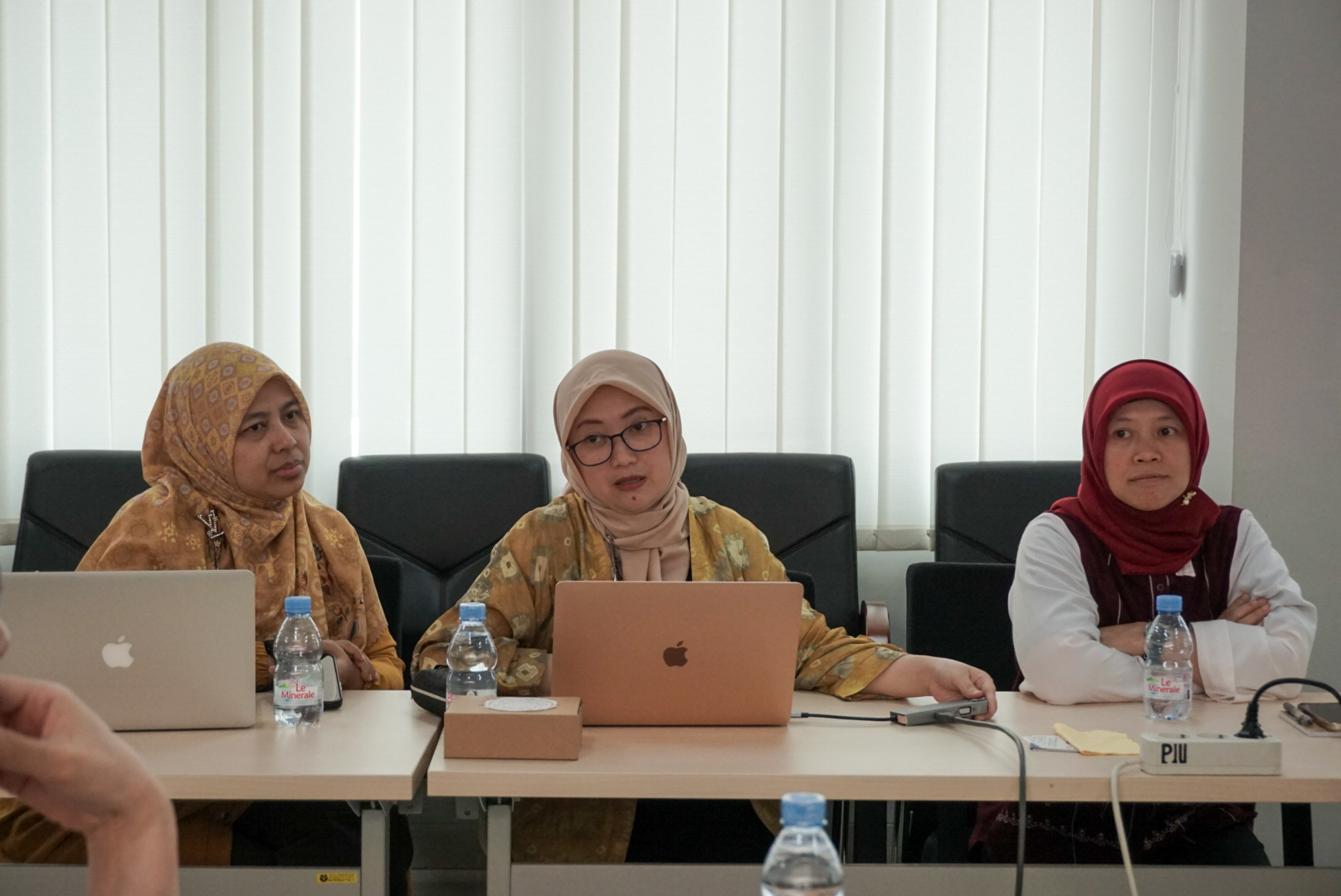
Representatives from UPI subsequently presented the University’s STEM Center, showcasing its ongoing initiatives in STEM education, teacher professional development, and educational innovation. The discussion explored opportunities for collaborative research, joint STEM learning activities, academic exchanges, and the sharing of best practices in science and technology education.
Meanwhile, the Language Group Discussion brought together representatives from the Faculty of Education of Shizuoka University and the Faculty of Language and Literature Education (FPBS) of UPI to discuss potential collaborative academic programs.
Among the proposed initiatives was the development of joint online classes, consisting of live Zoom lectures complemented by breakout room discussions to encourage intercultural interaction among students. UPI representatives suggested that the program involve students from at least the fifth semester onward to ensure sufficient academic readiness. Participants also discussed a model consisting of eight online meetings combined with eight independent project sessions, allowing the program to fulfill academic credit transfer requirements.
The discussion also explored opportunities for master’s students, particularly those in their first and second semesters, with potential implementation periods beginning in August or January. To facilitate program implementation, both institutions agreed on the importance of preparing detailed course fact sheets and ensuring that collaborative activities emphasize not only preparation for studying abroad but also meaningful teaching and learning experiences.
Teaching practicum emerged as another major topic of discussion. Both institutions proposed a structured practicum model consisting of five stages: pre-guidance, classroom observation, teaching assistance, microteaching, and reflective evaluation. Under the proposal, Shizuoka University students would undertake teaching practice at UPI Junior High School Laboratory School, with the program lasting approximately 14 working days or three weeks, including two weeks of online preparation followed by one week of onsite teaching practice.
The Partnership Meeting concluded with a shared commitment to transform the newly renewed MoU into practical academic programs that provide meaningful learning experiences for students and faculty members of both institutions. The discussions demonstrated a strong mutual commitment to strengthening collaboration in teacher education, research, academic mobility, and intercultural exchange.
Through this implementation meeting, Universitas Pendidikan Indonesia and Shizuoka University reaffirmed their dedication to building an innovative and sustainable international partnership. The initiatives discussed are expected to become important milestones in enhancing educational quality, promoting global engagement, and preparing future educators to thrive in an increasingly interconnected world.
Contributors: De Shila Syailinda Maulida, Arina Nafisa Ridwan, Intan Pratidina Dewi